Government of Kerala

CMO Portal
Nodal Officer V.Ramachandran Potty Managing Director Vision Varkala Infrastructure Development Corporation Ltd Phone : 6238028881

Government Orders
Centre for Performing Arts Planning Commission Order Sanctioning of 2 acres of land for construction from Tourism Dept Constitution of Design Committee GO on Technical Sanction – CPA Revised Administrative Sanction for Rs.10 Crore Master Plan – Varkala TOR for the Preparation on Master Plan Preparation of Master Plan – Entrusting the task to RITES Ltd Board of VIVID Corporation
Acts
Non-Resident Keralites’ Welfare Act
Establishment of Museum for Centre for Performing Arts
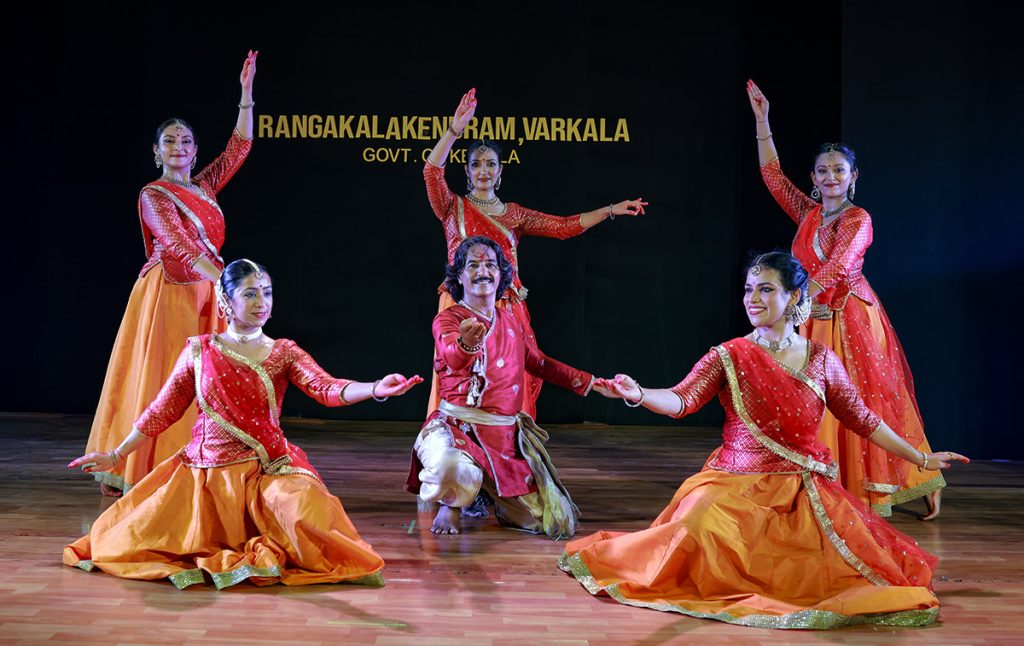
Kerala has been a preferred destination of discerning travellers from all over the world who prefer culture, traditions and heritage in the field of arts & crafts, blended with Ayurvedic system of rejuvenating physical health. The large numbers of foreigners who come to Kerala enjoy the rich traditional art forms of Kathakali, Koodiyattom, Nangiarkoothu, Theyyam, Kalaripayattu etc. A large number of students are also visiting various Centres of Performing Arts in the country to study about the various art forms in the traditional style. Kerala has its own typical art forms which reflect the life and outlook of the people. From the renowned Kathakali, considered to be the complete art form as it synthesis all that is best in the fields of drama, music and dance, to the folk dances which are reflections of the rhythmic impulses of a sensitive people. Recently, the UNESCO brought to light, a less known art form – Koodiyattom – and declared it as one among the ‘Masterpieces of the Oral and Intangible Heritage of Humanity’. For ages, the rich and vibrant culture of Kerala has intrigued people worldwide. Truly, the real treasures of Kerala lay in the cultural heritage of its people. Varkala is a destination of Pilgrimage and Tourism known internationally. Around 50000 Foreign and 1.60 lakh domestic tourists visit Varkala every year. Varkala is universally known for its geological speciality which is called “Warkallai Formation”. The Varkala Cliff is going to be declared as Geopark by UNESCO. CPA is being established under VISION VARKALA INFRASTRUCTURE DEVELOPMENT CORPORATION LIMITED, a Government of Kerala undertaking, headed by a team consists of Chief Minister as Chairman, Ministers, top Government Officials and Subject Experts as members of the Governing Body. The total Project cost is Rs. 10 Cr. As an initial step for the implementation of Construction of CPA, Planning Commission, Government of India sanctioned Rs.3 Cr and Government of Kerala sanctioned Rs. 1Cr for VIVID Corporation. Aims of Centre for Performing Arts, Varkala: To plan, promote, develop, operate, own, maintain, all infrastructural facilities, prepare project and feasibility report; implement projects and development of schemes; monitor economic and social welfare activities, render technical, financial and marketing supports and undertake development projects and services of Government, public, private , joint sectors; To provide all infrastructural facilities for establishing or for facilitating the establishment of, manufacturing, processing or packaging industries; electronic, hi-tech or knowledge based industries; agro based, food processing industries; tourism, leisure, recreation etc With the help of Modern Technology do research and evolve unique trends in presentation of Art forms. International Training Centre for Martial Arts, Folk Arts and Classical Arts. Help promoting Tourism in India. Centre’s Specialities: Kavu, Kulam (Lotus Pond) – which have traditional as well as mythical backgrounds. In the “Kavu” – the serpent dance and snake worshipping folk arts forms will be presented. Theme Nights Programme based on myths designed with the help of Modern Technology. Special Art and Cultural festivals of international standards. “Gurukulam” style of teaching. Kalari – the internationally acclaimed Martial Art form. Facilities will be provided for training and performance. Eco friendly structures, Concert Halls, Amphi theatre. A Design Committee is formed to approve the design of the Centre and also to provide guidance for the smooth functioning of the Centre. The Construction Work of the Centre for Performing Arts is entrusted with Hindustan Latex Life Care Ltd. As per the GO(MS) No : 103/2013/Tsm dated : 10-04-2013, Tourism Dept accorded Permissive Sanction to transfer 2 acres of land in Government Guest House Compound, Varkala for the establishment of the Centre for Performing Arts. The preliminary drawings of the work has been completed and submitted to Varkala Municipality and the Municipality provides Building Sanction for the construction of the Centre. The Centre for Performing Arts is a multi-use performance space that is intended for use by various types of the performing arts, including Koodiyattom, Kathakali, Chakkyarkoothu, Mohiniyatoom, Thullal, Theyyam, Kalampattu, Thiruvathira, Markgamkali, Oppana etc including various danceforms in around Kerala, Musicetc. Taking this concept into a much more holistic perspective, matured with the rich cultural heritage of Kerala and its wide varieties of performing arts and crafts, the Varkala Centre for performing arts and crafts have been given a divine design concept. The centre will be a unique institute in India in all respects. A need based approach may be followed in the setting up of the Centre. “Teach, Learn and Perform” is the operational concept behind the Centre. The prospective tourists in the Centre can Learn and practice the Kerala art forms in the Centre itself. The faculty of the Centre strives to promote the wonder of performing arts of Kerala within the gentle discipline of a positive and professional environment. The Centre may provide a natural environment comprising of Nalukettu, Koothambalam, Kavu, Kulam, Kalari etc. All provisions with in the centre will be standardized with a unique brand. The centre is proposed to be established as a God’s own village in Varkala for popularizing the extinct forms of Traditional Art with an eco-friendly atmosphere. The Centre will be a great attraction to the tourists visiting Varkala.
Preparation of Master Plan for Varkala
For the Comprehensive Infrastructure Development of Varkala Preparation of Master Plan is necessary. Preparation will enable to identify the projects suitable for Varkala and also the infrastructural facilities needed for the area. The work was entrusted with the Central Government agency Rail India Technical and Economic Services Ltd (RITES). The study is based on the geographic features of Varkala Municipality and surrounding seven panchayats. The team members from RITES Ltd conducted several studies, surveys in land records, Census Directorate, Archaeology Department, discussion with Municipality officials, Various Panchayat members and interaction with local people of Varkala area for gathering information. The preparation was completed and the Final Master Plan was submitted by the RITES Ltd.
Destination Development for Varkala
Destination Development – Varkala Maidanam As part of the comprehensive plan to develop Varkala into a major Tourist Destination, The Department of Tourism, Government of Kerala has decided to include the Revitalization of Varkala Maidanam. The Site is set amidst dense commercial development, with the police Station and Sub Registrar Office adjoining it. In the present scenario, chaotic and dilapidated state of the Radio Park has depreciated its true value and use. Existing Condition The boundary walls are dilapidated. Side Walk is not defined with proper drainage and surface treatment. Parking poses a serious problem for both the traffic and the pedestrians. Dense commercial development presents chaotic with hoardings, posters, advertisements etc. No proper Waste Disposal. Public misuse of pavilion and Park Benches. Deteriorated buildings. Illegal street vendors. Some Glimpses to the existing Scenario…… Improper maintenance of the Children’s park. The existing condition of the Park Benches
Construction of Balimandapam
Construction of Balimandapam at Varkala Papanasam is one of the major Projects undertaken by VIVID Corporation. Balimandapam facilitates pilgrims who come to Varkala for doing Vavubali at Papanasam (doing Hindu rituals for their departed souls during vavubali day). Balimandapam was constructed by Habitat Technology Group (Padmashri.Arch.G.Sankar) and under the strict supervision of Brahmashri.Kanipayyoor Krishnan Namboothirippadu (Doyan of Vasthu Vidhya and Kerala Temple Architecture). Lakhs and lakhs pilgrims gather at Varkala during vavubali day due to the speciality of Varkala Papanasam history (Dakshin Kashi). But this Balimandapam is to accomodate the daily pilgrims who come to Varkala for doing their rituals (Balitharpanam). The Mandapam absorbs 50-60 pilgrims at a sitting for doing thier rituals. The daily functioning of the Mandapam is entrusted with Travancore Devaswom Board authorities.
Contact us
Vision Varkala Infrastructure Development Corporation Ltd, House No.12/132 (1),”POOJA”, Behind Marthoma Church Road, Near Varkala Railway Station, Cherukunnam.P.O.Varkala-695141 Mobile No: 8547871170, 6238028881 Email: visionvarkala22@gmail.com
Vision Varkala
A slew of projects to augment the tourism potential of Varkala are currently on. It is in this backdrop that Vision Varkala 2020 launched by Vision Varkala Infrastructure Development Corporation Ltd (VIVID), a special purpose vehicle promoted by Kerala Government gains significance. A bali mandapam on the Papanasam beach, the first of the project under Vision Varkala 2020 has already been commissioned. This is meant for people coming from across the country to perform rituals and offer prayers in memory of departed souls on the day of vavu bali. The proposed National Centre for Performing Arts as part of Vision Varkala 2020 is meant for popularizing culture, heritage and tourism. This will be developed as a centre of international standards having tie-ups with the Association of Asia-Pacific Performing Arts Centre, Singapore for cultural and technology transfers across the globe. Two acres of land in the Government guest-house premises (Varkala) has been identified for the purpose and Rs.100 million allocated for the first phase of the project. Vision Varkala 2020 will also have a Sea Life Leisure Park as part of the water sports complex, which is first of its kind in the country, coming up on a 50-acre land. Implemented in PPP mode and aimed at increasing the tourist inflow to Varkala by five times, the park will serve as home to around 100 sea animals and five dolphins that will be used for entertainment and educational purposes. Rs.10,000 million has been allocated for the realization of this project. A pre-feasibility studey is also envisaged with the help of CMFRI. The Global Ayurveda Village is another major project as part of Vision Varkala 2020 for the development of Ayurveda in Varkala (developed by Kerala’s mentor Sam Pitroda). The Ayurveda village will be set up in 63 acres of land at Elakamon Panchayat. The Rs.2000 million project aims to make Varkala the world capital of Ayurveda with facilities for research and development and high-end treatment facility backed by high-class infrastructure. Vision Varkala 2020 is bound to enhance the significance of Varkala as a travel destination, which is annually visited by around 50,000 foreign travellers and 1.60 lakh domestic travellers.
Financial Statements
Independent Audit Report and Annexures Approved Accounts 2020-21
Activities & Intiatives
Projects /Activities undertaken by VIVID Corporation: Construction of Varkala Papanasam Balimandapam Centre for Performing Arts (CPA) Preparation of Master Plan for Varkala DPR Preparation for Waste Management Protection of Varkala Cliff Establishment of UNESCO Geo Park Establishment of Geo Park Museum Erection of National Geological Monument Board at Varkala Cliff area Skill Development Institute Geo-Spatial Information System Destination Development Location Areas of operation : Varkala Municipality Vettoor Grama Panchayat Chemmaruthy Grama Panchayat Navaikulam Grama Panchayat Madavoor Grama Panchayat Pallickal Grama Panchayat Elakamon Grama Panchayat Edava Grama Panchayat
Board of Directors
Sri Pinarayi Vijayan Chief Minister of Kerala Chairman, VIVID Sri P A Mohammed Riyas Minister for Tourism Co-Chairman, VIVID Adv.V.Joy Hon’ble MLA, Varkala Constituency Vice Chairman, VIVID Dr. A. Jayathilak. IAS Chief Secretary Director, VIVID Smt. Anukumari . IAS District Collector Director, VIVID Shri. K.Biju.IAS Tourism Secretary Director, VIVID Dr. Veena.N. Madhavan IAS Special Secretary, Planning & Economic Affairs Dept. Director, VIVID Adv. Adoor Prakash Hon’ble MP, Attingal Director, VIVID Shri.M.G. Rajamanickam IAS Secretary, Revenue Department. Director, VIVID Smt. Tinku Biswal IAS LGSD Principal Secretary Director, VIVID Adv. D. Suresh Kumar District Panchayath President, Thiruvananthapuram. Director, VIVID Shri V Ramachandran Potty Managing Director, VIVID Secretary,Finance Department.
Objective
To Plan, Promote, Develop, Operate, Own, Maintain, all infrastructure facilities; Prepare project and feasibility reports; Implement projects and development of schemes; Monitor economic and social welfare activities, Render technical, financial and marketing supports and Undertake developmental projects and services of Government, Public, Private & Joint Sectors. To provide all infrastructure facilities for establishing or for facilitating the establishment of, manufacturing, processing or packaging industries; electronic, hi-tech or knowledge based industries; agro-based, food processing industries; tourism, leisure, recreation, adventure, health management industries/ services, logistics infrastructure and warehouses, and; To render consultancy and advisory services in connection with infrastructure projects of any nature.
About VIVID
A Special Purpose Vehicle was formed on 15th October 2011 for the comprehensive Infrastructure Development of Varkala. It has been registered as a Company namely, Vision Varkala Infrastructure Development (VIVID) Corporation Limited on 25th February 2013. The Corporation Implements various type of projects such as PPP, Joint Venture, Private and Public by mobilizing funds from Govt., NRIs, Financial Institutions etc… It is a fully Government owned Company formed under the Department of Planning & Economic Affairs under the chairmanship of the Hon’ble Chief Minister. Hon’ble MLA Varkala, Hon’ble MP Attingal, Government Secretaries, District Collector and other Top Officials from various Govt organizations are the other Director Board members of the Corporation.
Paapanasham
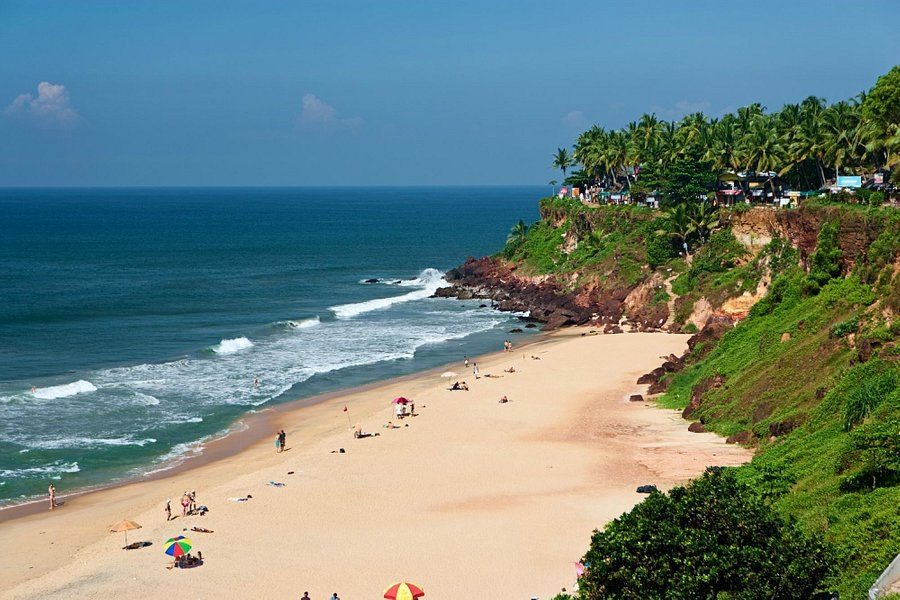
The silvery stretches of sand and the calm ambience on the beaches are the highlights of Varkala as a tourist destination. ‘Papanasam’ is one of the main beaches here and it is not only an important tourist spot but it also has religious significance. It is believed that a dip in the waters here will wash away all the sins (papam) and hence the beach obtained its name. Hindus find it a very auspicious place and ashes collected from the cremation grounds are immersed at the sea here. They believe that the sins of the deceased will be washed away and the soul gets moksha or eternal salvation through this ritual. Papanasam beach is a haven for sun-bathing and swimming. It is one of the most popular tourism destinations in Kerala. The evening views of the sunset are worth lingering over. The cliff and the beach house a lot of resorts, restaurants and other shops. The cliff has a long stretch of small shops which goes on for over a kilometer. The black part of the sand on the Varkala Beach contains Thorium-oxide which is a radioactive substance. Thorium and Thorium-oxide and its isotopes are found all over Kerala and can be identified by its black colour. Ambience at the beach Adjacent to the white sandy beaches are the pink laterite cliffs, which stand there like sentinels guarding the sea. The cliffs surround the beach and it is the ideal getaway for anyone who wants to escape from the hullabaloo of the urban life. Bordered by coconut palms and blessed with an idyllic serenity, the beach has a laid back ambience and it is often a traveller’s pleasure and rejuvenation point. You can collect sea shells; take a stroll on the sand enjoying the unending stretch of blue waters or lie down on the laid back sun kissed beach. It is the ideal spot for a sunbath or for a perfect view of sunset. The golden orange on the sky after the sunset will surely make you bow before the greatest artist, Nature. The outline of the fishing boats that appear on the horizon in this golden yellow background will surely spur the artist in you. Cliffs – peculiarities Varkala is the only place in southern Kerala where the cliffs guard the sea. According to geologists, these tertiary sedimentary formation cliffs are unique geological features. It is a geology monument which is called `Varkala formation’ among geologists. The natural spring gushing out the laterite cliff is believed to have medicinal quality, as it contains various minerals. Its therapeutic effect draws a lot of visitors to the spot and people take a dip in this spring in order to get cured of various diseases. The cliff is extensive and it has a winding footpath atop lined with hotels, shops etc., and the wide plateau on top provides a panoramic view of the surroundings. Climb on the hilltop and you will feel like in the midst of a village festival. Numerous shops which sell beads, curios, Tibetan charms, books, Rajasthan dresses and curios can be seen here. You can get a tattoo done or relish a delicacy looking at the sea from an eating joint here. You can also visit the bamboo village or just stand at the edge of the cliff enjoying all the serenity that the area harbours. Adventure sports and shopping If you are a traveller looking for some adventure, the beach also provides some scope for it. You can indulge in a number of adventure sports like parasailing, scuba diving and paragliding. You can also try your hand at deep sea fishing or can shop at the stores on the beach and can collect some wonderful souvenirs or curios. A range of sea food delicacies are available at the restaurants, which are sure to tickle your taste buds.
Varkala Tunnel
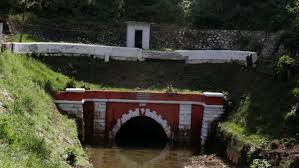
Backwaters of Kerala supported a much efficient transport system during the earlier times. It was through the network of backwaters that the goods have been transported from the north to the south of Kerala. Varkala was the southernmost part of this canal system. The travelers had to get down at Varkala and then walk a short distance in order to resume the travel through the backwaters which led to Thiruvananthapuram. It was in order to overcome this difficulty, the British decided to construct a tunnel in Varkala in 19th century. The project took almost 14 years to complete. It began in 1867 under the supervision of Travancore Diwan Sir. T Mahadeva Rao and was completed only in 1880, at the time of Diwan Sheshaya Sasthri. The construction of tunnel was one of the major development works not only of Travancore but also of the entire Kerala during that period. It consists of two tunnels. The first was completed in 1877 while the second was completed in 1880. The first one has about 2370 ft while the second one has 1140 feet length. Once the construction work had been completed, the tunnel was extensively used for ferrying of several kinds of goods. It was a major achievement as with its construction, water transportation from Tirur (of Malabar) to Trivandrum became a reality. Varkala tunnel has been mentioned in one of the earlier Sandesha Kavya (messenger poem) in Malayalam, which is called Mayoora Sandesham. The poet Kerala Varma Valiya Koyi Thampuran talks about the town of Varkala as well as the tunnel built by the British there. With the advent of advanced transportation methods through road, rail and sky, the transportation through Varkala tunnel has almost become negligible.
Janardhana Swamy Temple
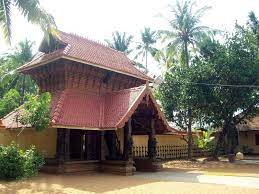
One of the ancient temples in Kerala, the Janardhana temple is a major pilgrim spot in Varkala. The temple, which has a history of some 2000 years, is located on a steep hill, at the entrance of the beach road. Ambience and architecture Varkala Janrdhanaswami Temple is popular not only as a pilgrim centre but it also allures everyone with its architectural splendour. The temple faces Papanasam beach and the proximity to the sea adds to its spiritual as well as aesthetic aura. A flight of broad steps lead to the Janardhana temple and on the way, you will be greeted by a high entrance arch with tiled roof. An old banyan tree stands on the temple ground and idols of several serpent gods and goddesses are also installed here. Brightly painted idols of Hanuman, Garuda, Lord Shiva and others greet you once you are about to enter the sanctorum. The main shrine Lord Janardhana (Vishnu) has four arms in which are placed shanghu (the holy conch shell) chakra (wheel), gada (mace) and kumbham (pot). The temple has many attractive features and it has a circular sanctum sanctorum surmounted by a conical dome of copper sheets. The mandapa or pavilion is square in shape and it has wooden carvings of Navagrahas (nine planets) on the ceiling. There is a hall in which the bali peetha is situated and this too is an important feature of the temple architecture. Though the original date of construction of the temple is not available, there are some inscriptions which indicate that the renovation of the temple had been carried out at different periods of history. One of the inscriptions says that the temple was renovated by Umayamma Rani, who ruled this region in the later 17th century. An ancient inscription dated 1252 has also been found on the temple premises. It is seen engraved on the lower part of the mandapa before the temple. Tall granite posts and heavy brass bells hung from ceilings too evoke interest in a connoisseur. The oil trays cut in the granite posts hold lighted wicks during evenings and it is a treat to the eyes. There is a pool called `Chakra Theertha’ on the northern part of the temple which is about 240 ft in circumference. Festival The main festival of the temple Arattu, falls in March/April and it attracts a lot of visitors. Karkidaka vavu too is an important function and the priests of this temple help the devotees perform homage to their ancestors during that day.
Sivagiri Matt
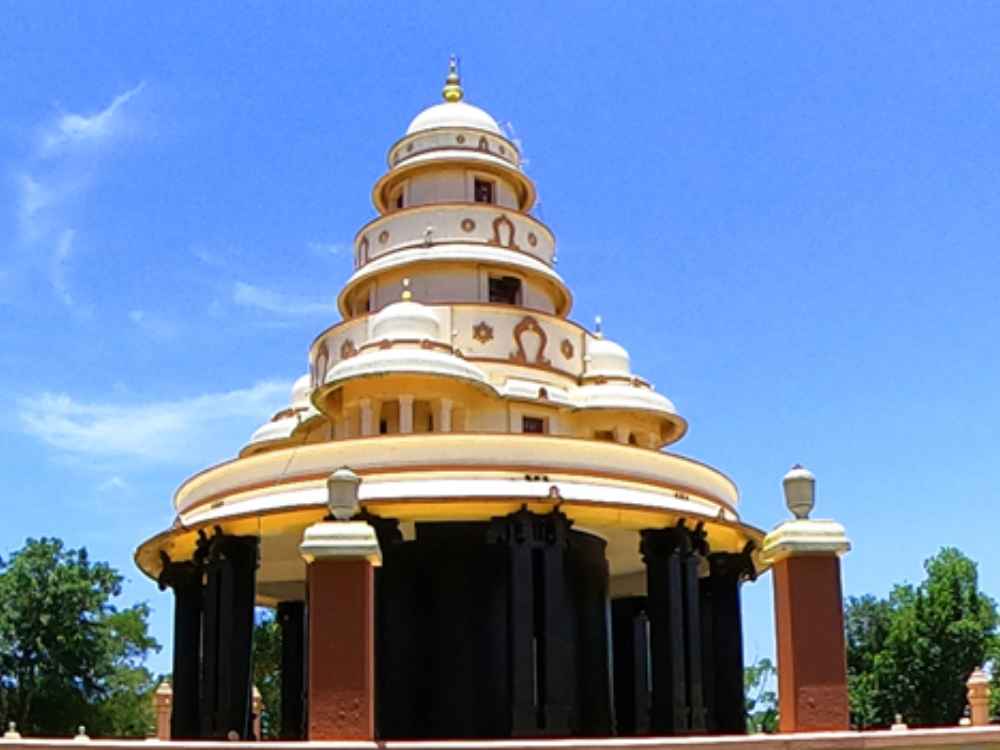
One of the major landmarks in Varkala is the Sivagiri Mutt, established by the social reformer Sree Narayana Guru. The hill-top mausoleum of Sree Narayana Guru is one of the most famous monuments in Kerala. Sree Narayana Guru was attracted to this place not only because of its natural beauty and serene surroundings, but was also due to its geographical nature of hill tops and valleys. During the year 1903 Guru used to come to Varkala regularly and rest here in search of Truth. In the beginning he sat near a jack tree. Later Guru made a temporary ‘Parnasala’ and stayed there. On its south side, there was a no man’s land hill; Guru managed to get it registered in his name and established his Asramom on the top of the hill and reside there. The place became known as Sivagiri from then onwards. Sivagiri today has become one of the most sacred centres of pilgrimage for the people from all walks of life irrespective of caste, creed, religion or language. Gandhiji came here thrice – while Swamiji was alive, Gandhiji came to Sivagiri on 12-3-1925 and stayed a day in the Asramom, and twice after Swamiji’s Samadhi. Acharya Vinobabhave visited Sivagiri in 1925 and he proclaimed later that the Guru is an ‘Avathar’. “Sree Narayana Guru is considered as one of the ‘avathars’ that have appeared in India during the last 100 years. Rabindra Nath Tagore, the Great Indian Poet who visited Sree Narayana Guru on Nov 22, 1922, Says that he never come across one who is spiritually greater than Swamy Sree Narayana Guru of Malayalam. He stated that he shall never forget the “ readiant face of Guru illuminated by self effulgent light of divine glory and those yogi’s eyes fixing their gaze on a far remote point in distinct horizon”. In 1903 Guru established a school to teach poor students and a night school for “backward” and “untouchables”. He also started an industrial training centre here to impart job training to the people. Guru wanted Sivagiri as a spiritual centre and ultimately Sivagiri termed to be a centre of everything connected with Guru, his teachings, his message etc. The idol of sarada, the goddess of wisdom and prosperity was installed at Sivagiri in 1912. Thus Sivagiri is a holy hill, where people from all parts of the world meet to seek knowledge, mental love and affection and for blessing of the God for all occasions. With the installation of Siva the place justified its name “Sivagiri”, the mountain of Siva, the pedestal from where all the Godly blessings come to man. According to Guru, spiritual support and sublimation of soul will strengthen natural life. The Mutt campus sprawls over an area of 200 acres and you will surely be attracted by the distinctive multi-tiered white terraces of the mutt, once you enter there. Situated at an elevated plateau, the mutt is considered sacred. It is here that the social reformer and sage Sree Narayana Guru breathed his last in 1928. The Samadhi or the final resting place of the Guru is situated on a hillock here and it attracts thousands of pilgrims. There is also the Guru’s residence and it displays his personal belongings. You can also see a Sharada temple here. The main idol, Goddess Saraswati, here was consecrated by the Guru himself. History Sree Narayana Guru was attracted by the nature’s beauty and the calm ambience at Varkala and built a hermitage on top of the Sivagiri hill in 1904, which later turned out to be a major pilgrim centre. Later the Travancore State Government granted Sivagiri Hill to the Guru and some people near the place also offered land to him. Thus Sivagiri turned out to be the nerve centre of all Sree Narayana Movements. Apart from the Guru, there were many social reformers who helped establish the Mutt at Sivagiri. The socio-political activist of yesteryears Dr. P. Palpu and the renowned Malayalam poet Kumaran Asan were some of them. They were ardent followers of the Guru and had distinct ideas on reformation of the society and Ezhava community. Sree Narayana Guru understood and always stressed on the importance of education. Hence he set up an elementary school here. A night school was also founded for the illiterate people of an untouchable caste. When his disciples wanted to build a temple here, the Guru dedicated it to the Goddess of Knowledge, and consecrated the idol of Goddess Saraswathi here. Thus the Saradha (Saraswathi) temple here came into being in 1912. Architecture and distinctive features of the temple The Sivagiri Sarada temple is octagonal in shape and was planned and designed by the Guru himself. The Sarada temple here has windows, which were very uncharacteristic of a temple. The Guru called it Sarada Mutt and he wanted to dedicate it to Saraswathy, the Goddess of knowledge. The goddess is seated on a white lotus, indicating the knowledge blossoming on purity. The rituals are also is different from that of other temples. While other temples perform nivedyam (offering of food to the deity) or abhishekam (pouring oil, ghee and such on the idol), Sharada temple is devoid of all such rituals, The devotees are free to worship the goddess reciting hymns. Guru, himself a writer and poet, wrote Janani-navaratna Manjari, in praise of the Goddess. Apart from consecrating a symbolic idol and shunning all tantric rituals, the Guru also insisted on keeping high hygiene standards on the temple premises. His followers adhere to the Guru’s words now too and the temple is thus very different from other temples in the world. Festivals The Birthday and Samadhi day of the Guru which fall in August/September are observed at Sivagiri Mutt with much relevance. On Gurudeva Jayanthi day, the birthday of the Guru, colourful processions, debates, seminars, public meetings and cultural shows are conducted. Thousands of followers wearing yellow attire take part in the procession. Another important festival here is Sivagiri pilgrimage which is observed on
About Varkala
Varkala is a coastal town, popularly known as Dakshina kasi is a famous holy place from centuries ago. It is the suburban town of Thiruvananthapuram (Trivandrum City). It is Located 50 Kilometers (Appro.32 miles) north – west of Thiruvanathapuram and 37 Km South- West of Kollam city. Varkala is the only place in southern Kerala where cliffs are found adjacent to the Arabian Sea.[2] These Cenozoic sedimentary formation cliffs are a unique geological feature on the otherwise flat Kerala coast, and are known among geologists as Varkala Formation and a geological monument as declared by the Geological Survey of India. There are numerous water spouts and spas on the sides of these cliffs. Varkala is also famous for the 2,000-year old Janardana Swami Temple which is an important Vaishnavaite shrine in India and is often referred to as Dakshin Kashi (Benares of the South).[3] The temple is located close to the Papanasam beach, which is considered to have holy waters which wash away sins, and is also an important Ayurveda treatment centre. The temple has an ancient bell removed from a shipwreck, donated by the captain of the Dutch vessel which sank near Varkala without causing any casualties. The place was also called Udaya Marthandapuram, commemorating the contributions of Udaya Marathanda Varma, a Travancore King, to the development of Varkala. The king in 1762 built rows of houses in the obscure sea side village of Varkala in order to make the local Brahmins settle here. There are several stories and legends related to the birth of this place. One such story is related to the construction of the Janardhana Swami temple. Lord Brahma instructed one of the Pandyan Kings to build a temple in order to redeem his souls from the sins he has committed. In his dreams the king received a prophecy which suggested Varkala as the location to build the temple. The name of the place is attributed to another legend of Sage Narada. According to this legend, Sage Narada was visited by the nine prajapathis who told him that they had sinned. He threw his valkalam (garment made of tree bark) to earth. Narada told the prajapathis to go there and pray for their redemption. Since then the scenic village were the valkalam fell was called by the name Varkala (derived from valkalam). Varkala was known to ancient foreign traders, says many historical documents. The place had been referred to as `Balita’ in The Periplus of the Erythraean Sea, the ancient Greek manuscript describing navigation and trading opportunities. Topography Varkala has a distinctive topography and this itself is the highlight of the place. It not only harbours the scenic charm of a calm beach, but attains a majestic quality with the towering laterite cliffs along the beach. Standing like sentinels overlooking the turbulent sea, the cliffs provide the best enchanting view of the sea. The wide plateau of the cliffs also houses many hotels and restaurants. You can see long winding roads from Varkala town which leads to one of the higher cliffs, where a helipad has been built. The laterite cliffs, the golden sands and the rolling waves of the sea provide a unique charm to the place and its unique geological formation attracts a lot of geologists too to this place. The cliffs also harbour natural springs and they are believed to have medicinal qualities. You can see a lot of people taking bath in the medicinal springs. The beach here is called Papanasam beach which is believed to wash away sins. During monsoons, the place is less frequented by tourists due to sea erosion and heavy downpour. Kappil Beach, another major attraction in Varkala, is situated a few kilometres away and it also draws large crowd. The beauty of Varkala is enhanced by the presence of backwaters at some places and Ponnumthuruthu Island, surrounded by backwaters near Varkala is another hot tourist spot. A boat ride through the backwaters, watching the vegetation on either side is a delightful experience. Varkala town is well connected through road, rail and waterways to Thiruvananthapuram and Kollam. Water transport, which was the main means of travel during earlier times, has now become almost out of use. Climate Varkala has a moderate humid climate, with temperature ranging from 30 to 36 degree Celsius. It experiences heavy rains from June to August (Southwest Monsoon) and the average rainfall is 310cm. with heavy rains during June-August due to the southwest monsoon. The best season to visit the place is October to February. Major Landmarks
Kerala at a Glance
Kerala at a Glance With the Arabian Sea in the west, the Western Ghats towering 500-2700 m in the east and networked by 44 rivers, Kerala enjoys unique geographical features that have made it one of the most sought after tourist destinations in Asia. An equable climate, a long shoreline with serene beaches, tranquil stretches of emerald backwaters, lush hill stations and exotic wildlife, waterfalls, sprawling plantations and paddy fields, ayurvedic health holidays, enchanting art forms, magical festivals, historic and cultural monuments, an exotic cuisine, all of which offers a unique experience altogether. Kerala, India’s most advanced society has a hundred percent literacy rate. World-class health care systems, India’s lowest infant mortality and highest life expectancy rates, the highest physical quality of life in India, peaceful and pristine, Kerala is India’s cleanest state. Geography With the Arabian Sea in the west, the Western Ghats towering 500-2700 m in the east and networked by forty-four rivers, Kerala enjoys diverse geographical features. Kerala is divided into three geographical regions: Highlands, which slope down from the Western Ghats onto the Midlands of undulating hills and valleys into an unbroken coastline with many picturesque backwaters, interconnected with canals and rivers. The Western Ghats are nowhere more than 120 kms from the sea. Seasons Bestowed with a pleasant and equable climate throughout the year, Kerala is a tropical land with the coast running down its entire length and the Western Ghats forming a protective barrier against the dry winds from up north. The monsoons (June-September & October-November) and summer (February-May) are the seasons markedly experienced here, while winter is only a slight drop in temperature from the normal range of 28-32°C. History Kerala’s history is closely linked with its commerce, which until recent times revolved around its spice trade. Celebrated as the Spice Coast of India, ancient Kerala played host to travelers and traders from across the world including the Greeks, Romans, Arabs, Chinese, Portuguese, Dutch, French and the British. Almost all of them have left their imprint on this land in some form or the other – architecture, cuisine & literature. Location Kerala is situated on the southwestern coast of India, a country in South Asia. This tropical paradise enjoys a unique topography with Arabian Sea, a part of the Indian Ocean on the west and the Western Ghats on the east.